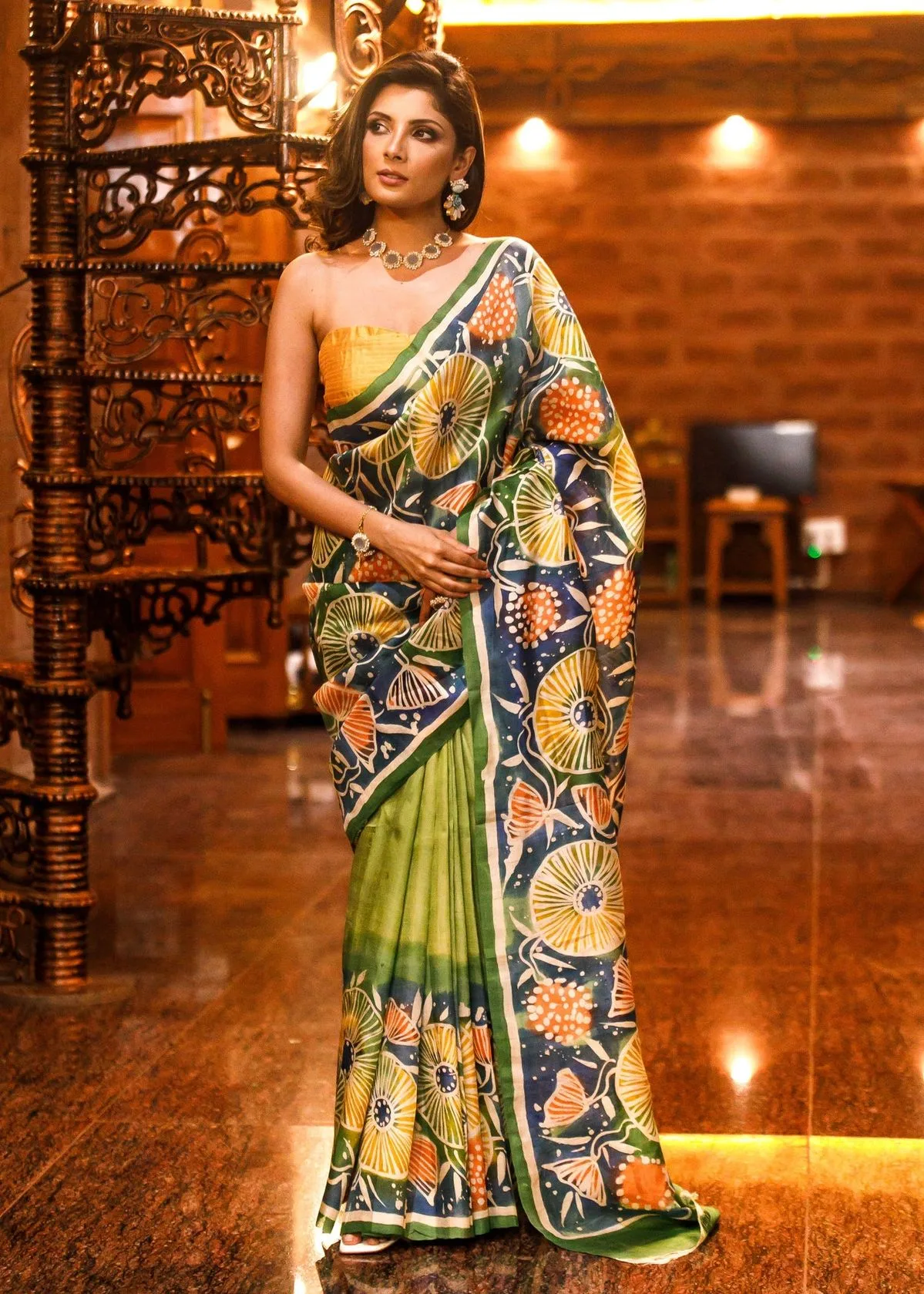
What if your saree could tell you a story?
Not just a story about fashion, silk or beautiful colors, but a story about kings, temples, artisans, mythology and centuries of Bengali craftsmanship.
That is exactly where flaunting Bishnupur Sarees becomes fascinating.
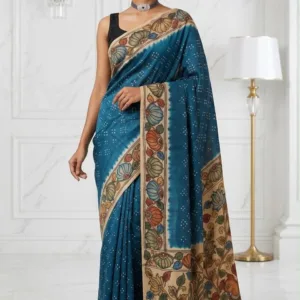
The moment you look at one, you may notice the rich silk, the intricate borders or the beautiful pallu. But look a little closer and you will discover something more. You will find motifs inspired by Bengal’s artistic heritage, stories drawn from mythology and craftsmanship that has travelled across generations.
So, if you have always admired traditional Bengali sarees but wondered what makes Bishnupuri silk different, let’s take a little journey through its history, craftsmanship, designs and styling possibilities.
And trust me, there is quite a story to uncover.
Here are 5 reasons why you must own one.
Let’s look at them below:
First Things First: What Exactly Are Bishnupur Sarees?
Let’s start with the obvious question.
What exactly makes a saree a Bishnupur saree?
Bishnupur, located in West Bengal’s Bankura district, is much more than a destination famous for its terracotta temples. It has long been an important centre of art, culture, music and traditional crafts.
And naturally, that artistic environment influenced its textiles.
When you explore Bishnupur Sarees, you will often notice designs that feel distinctly connected to Bengal. You may come across floral patterns, geometric details, temple-inspired elements and, in more elaborate designs, entire scenes woven into the fabric.
In other words, the saree doesn’t just look beautiful.
It has something to say.
And that storytelling quality is one of the reasons these sarees continue to attract people who appreciate Indian handloom.
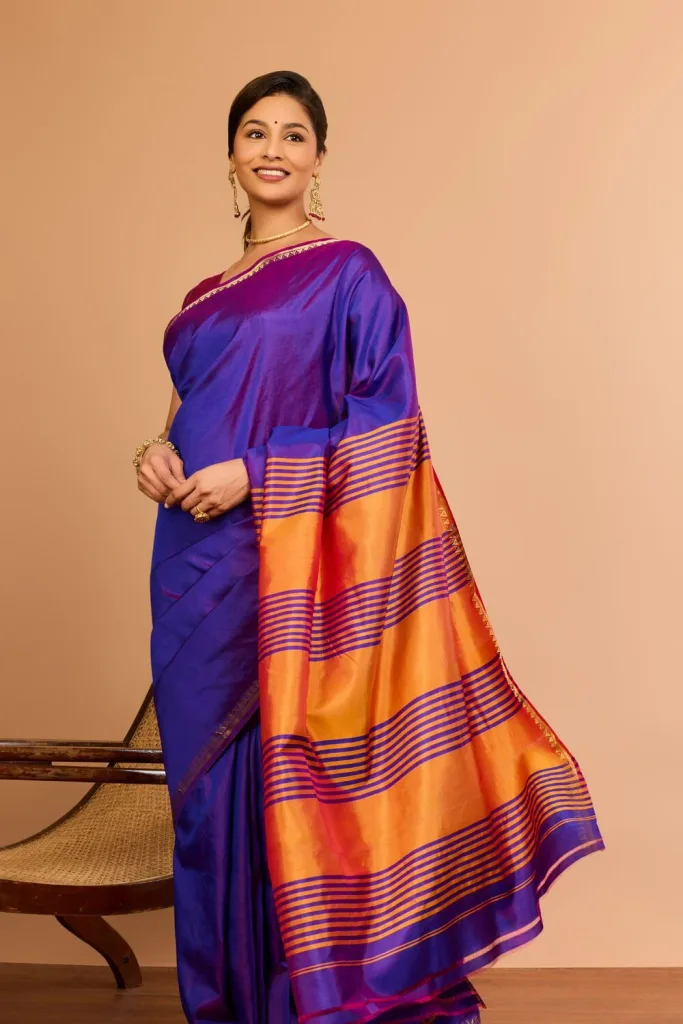
Photo Credit: Pinterest
2. Now, Let’s Go Back in Time…
To understand why Bishnupur became so important to Bengal’s textile tradition, you need to go back several centuries.
Bishnupur flourished under the Malla rulers, particularly during the period when the region became known for its remarkable temples, art and culture.
Walk through Bishnupur even today and you will immediately notice the influence of that era.
The terracotta temples are covered with detailed scenes and artistic motifs. Mythological stories, figures, animals, flowers and everyday life appear in the architecture.
Now imagine taking those stories off the temple walls and putting them onto silk.
That’s essentially what makes the region’s textile tradition so captivating.
The same love for detail and storytelling found in Bishnupur’s art gradually found expression in its weaving traditions.
3. And Then Comes the Baluchari Connection
Here’s where the story gets even more interesting.
You may have heard of Baluchari sarees — those gorgeous sarees famous for their elaborate narrative designs.
The tradition originally flourished in Baluchar, Bengal. But floods and other disruptions affected the weaving community, and skilled artisans eventually moved to Bishnupur.
And that movement changed the course of the craft.
With the support of the Malla rulers and the presence of skilled weavers, Bishnupur became an important centre for this rich weaving tradition.
So, when you admire a traditional saree from this region, you are looking at the result of generations of movement, adaptation and craftsmanship.
Pretty amazing, isn’t it?
4. Look at the Pallu. That’s Where the Story Often Begins.
Here’s a little tip for you.
The next time you see an elaborate Bishnupur or Baluchari saree, don’t just glance at the overall design.
Look at the pallu.
Why?
Because that’s often where the weaver gets to tell the biggest story.
You may find scenes from the Ramayana or Mahabharata. You might see mythological characters, royal processions, musicians, dancers, animals or scenes inspired by everyday life.
Instead of simply decorating the saree, these motifs create a visual narrative.
It’s almost like reading a story — except the story has been woven instead of printed.
And that is what makes these sarees so much more than ordinary festive clothing.
5. Can You See Bengal in the Design?
Absolutely.
One of the most beautiful things about Bishnupur Sarees is how closely they connect fashion with the artistic identity of Bengal.
Think about Bishnupur’s terracotta temples.
Think about their distinctive geometric details, floral elements, mythological scenes and architectural forms.
Now imagine those visual elements being translated into threads.
That is where the real charm lies.
The designs don’t feel randomly chosen. They often draw from the cultural surroundings of the region.
So, when you wear one, you are carrying a small piece of Bengal’s artistic vocabulary with you.
But Wait — What About the Silk?
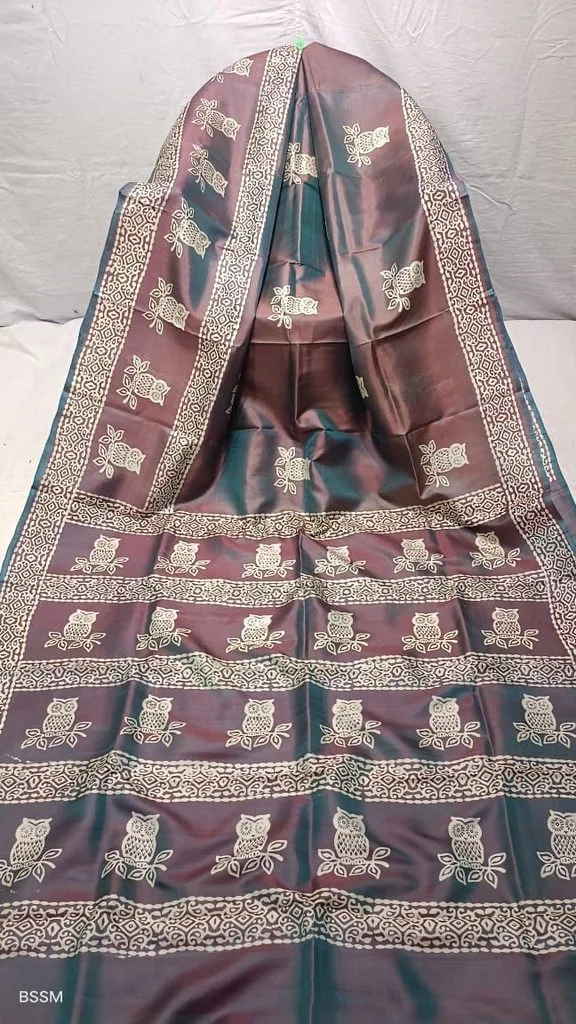
Photo Credit: Pinterest
Of course, we cannot talk about Bishnupur Sarees without talking about silk.
Bishnupur has a long association with silk weaving, particularly mulberry silk.
And if you love sarees that feel elegant without being overwhelmingly heavy, you may really appreciate this fabric.
Mulberry silk gives you that beautiful combination of softness, sheen and graceful drape.
You may also encounter other silk varieties associated with the broader regional tradition, including Tussar and Muga.
Each one has its own personality.
Mulberry Silk: Smooth and Elegant
If you want that classic silk feel, mulberry silk gives you a smooth texture and natural lustre.
It works beautifully for festive occasions when you want something luxurious but still comfortable to wear.
Tussar Silk: Textured and Naturally Beautiful
Tussar has a more textured appearance.
If you prefer fabrics with a slightly earthy, organic character rather than a very polished shine, this can be a lovely option.
Muga Silk: Naturally Golden
Muga is particularly known for its natural golden appearance.
It has a distinctive richness that immediately makes a saree feel special.
So, depending on the silk and weaving style, you can discover quite a range within the larger Bishnupur textile tradition.
Here’s Something You May Not Know: Dhoop Chhaon
Have you ever looked at a saree in sunlight and noticed that its colour seems to shift slightly when you move?
That beautiful play of colour is often associated with the Dhoop Chhaon effect.
The effect comes from the interaction of differently coloured threads within the weave. As light falls on the saree from different angles, you may notice subtle changes in the way the colours appear.
And honestly, this is one of those details you appreciate much more when you see the saree in person.
A photograph can show you the colour.
But movement shows you the magic.
So, How Is a Bishnupur Saree Actually Made?
Now let’s talk about the person behind the beauty: the weaver.
When you look at a finished saree, it is easy to admire the colour and design without thinking about how much work went into creating it.
But handloom weaving requires patience, precision and an extraordinary amount of skill.
The weaver prepares the yarn, sets up the loom and carefully builds the design through the weaving process.
And when the saree contains an elaborate narrative pattern, the work becomes even more demanding.
Some complex Bishnupuri silk sarees can take several days or even weeks to complete, depending on their design and level of detail.
So, the next time you see a detailed pallu, pause for a second.
Every motif represents someone’s time and craftsmanship.
What Happened When the Craft Started to Decline?
Like many traditional Indian crafts, the weaving tradition faced difficult periods.
Changing markets, economic pressures and shifts in consumer preferences made it increasingly difficult for traditional artisans to sustain their craft.
But the story didn’t end there.
The introduction and revival of jacquard weaving played an important role in bringing intricate designs back into the spotlight.
The technique allowed weavers to reproduce complex motifs more efficiently while retaining the visual richness that made the tradition special.
This helped the craft adapt to changing times without completely losing its traditional character.
And perhaps that’s the secret behind the survival of handloom.
Tradition doesn’t always stay exactly the same. Sometimes, it learns how to evolve.
Why Do Bishnupur Sarees Feel So Different?
Let’s make it simple.
When you choose a Bishnupur Saree, you are choosing several things at once.
You are choosing silk.
You are choosing handloom craftsmanship.
You are choosing Bengal’s artistic heritage.
You are choosing storytelling.
And you are choosing something that doesn’t look like it came straight off a mass-production line.
Every saree can have its own character.
Every motif can have its own inspiration.
And every weave carries the hand of the artisan who created it.
That’s something you simply don’t get from ordinary machine-made fashion.
What Designs Should You Look For?
If you are planning to buy Bishnupur Sarees, here’s where you can have some fun.
Mythological Motifs
Love Indian mythology?
Look for sarees featuring scenes or characters inspired by the Ramayana, Mahabharata and other traditional stories.
These designs can make the pallu feel almost like a miniature painting.
Floral Motifs
Prefer something subtle?
Floral and nature-inspired motifs can give you a softer, more versatile look.
They work beautifully when you want traditional elegance without an extremely elaborate narrative design.
Temple-Inspired Patterns
If you want something that strongly reflects Bishnupur’s heritage, look for temple-inspired borders and geometric motifs.
These designs connect your saree visually with the famous terracotta architecture of the region.
Narrative Pallus
And if you want people to stop and look at your saree, choose a narrative pallu.
This is where the artistry can really shine.
How Can You Style Bishnupur Sarees Today?
Now let’s move from history to your wardrobe.
Because let’s be honest — knowing the history is wonderful, but you also want to know how you can actually wear the saree.
And here’s the good news.
You don’t have to style a heritage saree in only one traditional way.
For a Classic Bengali Look
Pair your saree with a traditional blouse, gold jewellery, a neat bun and a bindi.
Add a pair of statement earrings and you have a timeless festive look.
For a Modern Look
Want to make it contemporary?
Try a contrasting blouse.
Experiment with statement sleeves, a high-neck design or a structured silhouette.
Keep the jewellery minimal and let the saree remain the centre of attention.
For a Festive Evening
Choose a deeper colour, add elegant jewellery and style your hair in a sleek bun or soft waves.
The silk will naturally bring richness to the look.
And if your saree has a detailed pallu, drape it in a way that allows the design to remain visible.
After all, why hide the artwork?
Can You Wear Bishnupur Sarees Beyond Weddings?
Of course.
In fact, you absolutely should.
A lighter Bishnupur silk saree can work beautifully for a family gathering, cultural event, festive lunch or even a special day at work.
You don’t always need heavy jewellery and elaborate styling.
Sometimes, a simple blouse, small earrings and an elegant drape are enough.
That’s the beauty of a versatile handloom saree.
You decide how traditional or contemporary you want to make it.
Bishnupur vs Other Indian Silk Sarees: What’s the Difference?
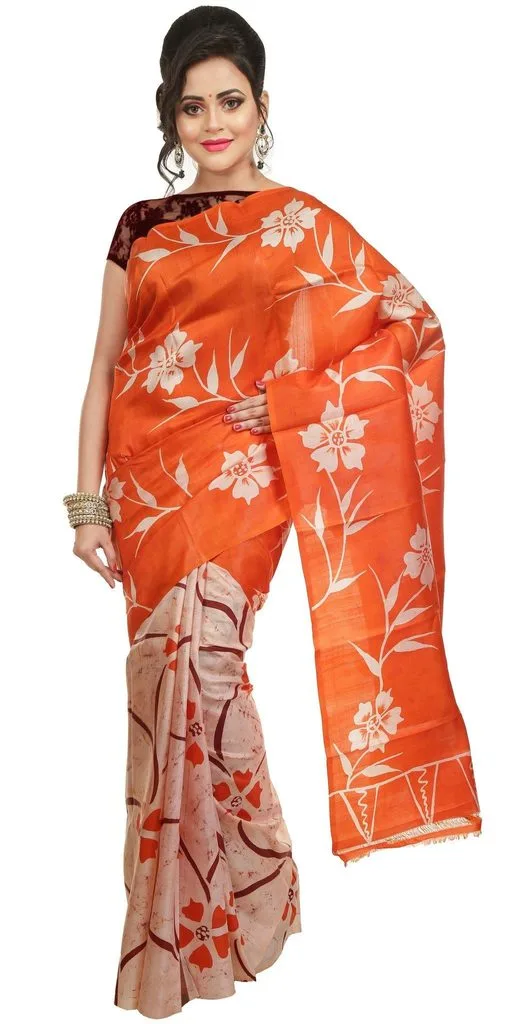
Photo Credit: Pinterest
India gives you an incredible number of silk traditions.
So how does Bishnupur stand apart?
Think of Kanchipuram and you immediately think of rich silk, bold borders and elaborate zari.
Think of Banarasi and you picture luxurious brocade and intricate zari patterns.
But when you think of Bishnupur Sarees, think of something else.
Think storytelling.
Think Bengal.
Think terracotta temples translated into textile motifs.
Think of a saree where the pallu can become a canvas.
That distinct personality is what makes Bishnupur worth exploring.
What Should You Check Before Buying One?
If you are investing in a handloom saree, don’t rush.
Take your time.
Look at the weave.
Check the detailing.
Ask about the silk used.
Ask whether the saree is handwoven.
And if the saree features a traditional craft such as Baluchari, ask about its authenticity and origin.
You can also look for relevant GI identification where applicable. Baluchari sarees from West Bengal received Geographical Indication recognition in 2011, helping protect the identity and heritage of the craft.
Most importantly, buy from a seller who can tell you where the saree came from and how it was made.
Because when you’re paying for handloom, you deserve to know the story behind what you are buying.
Why Should You Add a Bishnupur Saree to Your Collection?
Here’s the simplest answer.
Because trends come and go.
Heritage stays.
A Bishnupur Saree can become the saree you reach for when you want to feel elegant, rooted and completely yourself.
You can wear it to a wedding.
You can wear it during Puja.
You can style it for a cultural celebration.
You can even give it a modern twist and make it your own.
And years later, you may look at that same saree and remember the occasion when you first wore it.
That is the beauty of investing in handloom.
You aren’t simply buying clothes.
You are collecting stories.
The Final Drape
So, the next time you see a beautiful Bishnupur silk saree, don’t stop at the colour.
Look at the border.
Look at the pallu.
Look at the motifs.
Look at the weave.
And then think about everything that had to happen before that saree reached your wardrobe.
Generations of artisans had to preserve the skill.
Stories had to travel from one generation to another.
Traditional designs had to evolve.
And finally, thousands of individual threads had to come together to create one beautiful piece of fabric.
That is why Bishnupur Sarees deserve more than just a passing glance.
They are fashion, history, art and storytelling — all wrapped into one.
And when you drape one around yourself, you aren’t simply wearing a saree.
You are wearing a story from Bengal.