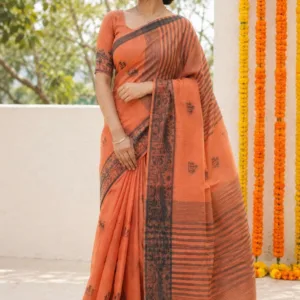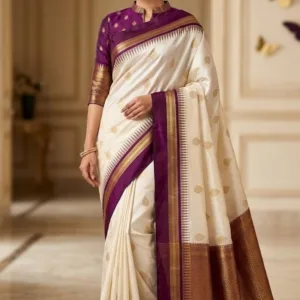
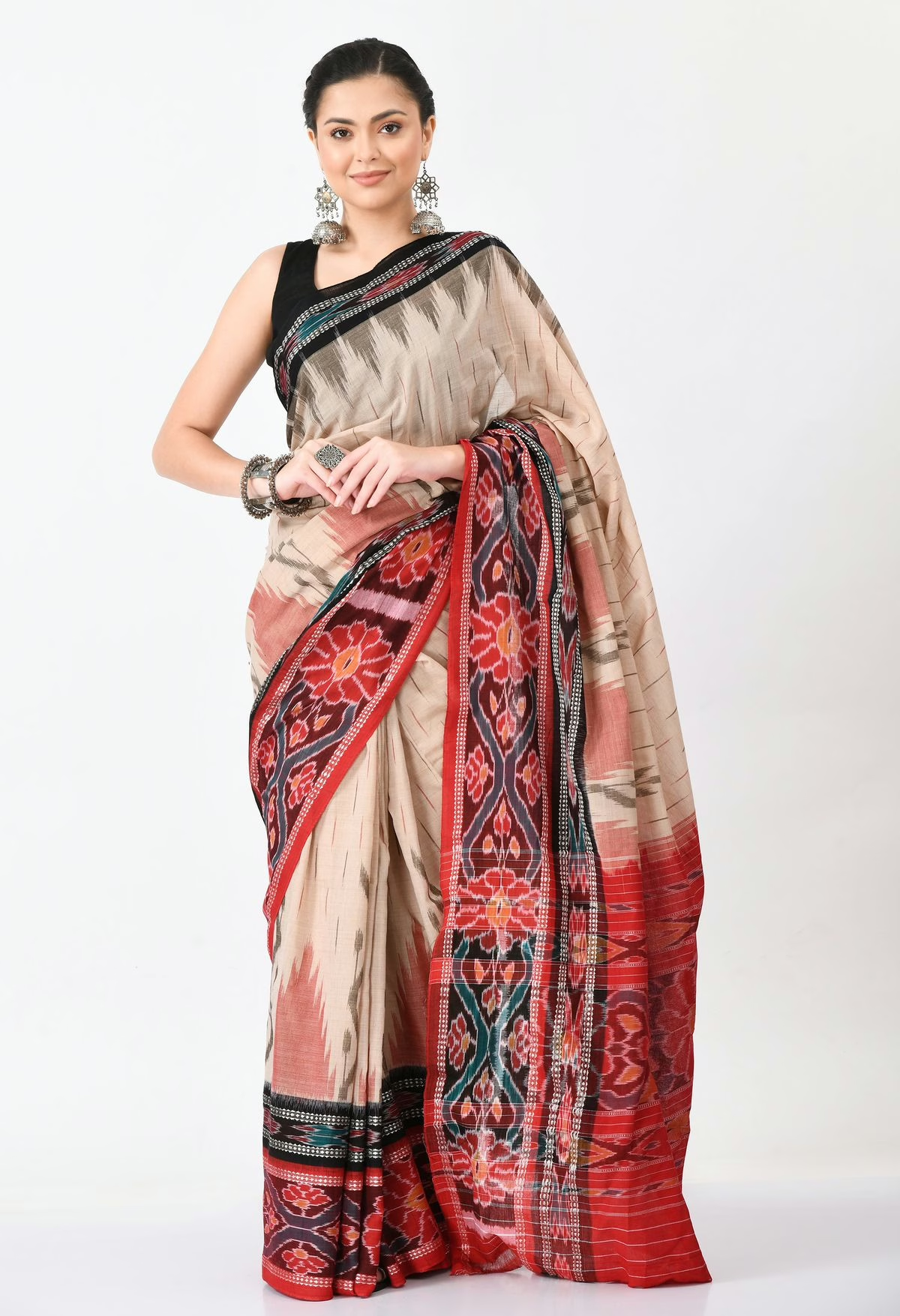
If you love sarees that feel both personal and timeless, the Ikkat saree is one piece you will truly enjoy exploring. It’s a handwoven cotton saree that carries the warmth of skilled hands and the depth of age-old craftsmanship. What makes it so special is its unique artisan weave, where every thread is hand-dyed before it is woven—resulting in those soft, dye-resist patterns that give each saree its beautifully imperfect charm.
The true magic of Ikkat lies in how effortlessly it slips into your everyday routine. Whether you’re dressing for work, running errands, or heading out for a quiet outing, its traditional weave art gives you a look that feels elegant without trying too hard. If you love sarees that tell a story through texture, colour, and authentic craft, the Ikkat saree deserves a place in your collection—especially if you appreciate slow-made textiles and thoughtful, mindful fashion.
Below are five simple, practical steps that help you identify a real Ikkat saree while shopping—online or offline.
1. Notice How the Patterns Look Soft and Blurry
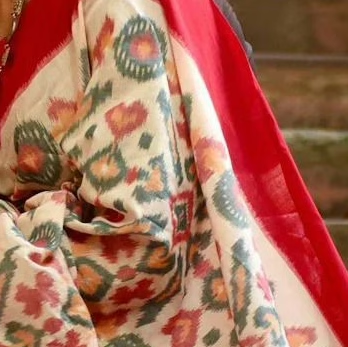
Photo Credits: Pinterest
The first thing you should do when you pick up an Ikkat saree is take a close look at the patterns. In a genuine piece—especially one created from hand-dyed yarn—nothing will appear sharply printed or perfectly aligned. Instead, you’ll see soft, blurred edges that almost resemble gentle watercolor strokes.
This natural fuzziness is the strongest sign of authenticity because artisans dye each thread before weaving. When these threads come together on the loom, the colours shift ever so slightly, creating that soft, diffused look that machines can never replicate.
If the motifs look too crisp, too perfect, or too uniform, it’s most likely a printed imitation. A real Ikkat carries that beautiful, handcrafted irregularity that makes it truly special.
2. Turn the Saree Over and Check the Back

Photo Credits: Pinterest
This is one of the quickest and most reliable checks. Flip the saree and compare the front and back. A genuine Ikkat—especially one woven using traditional loom techniques—shows its design almost equally on both sides, because the pattern is woven into the fabric itself.
Printed sarees immediately reveal the truth. The back usually looks faint, patchy, or completely plain. Colors sit only on the surface and fail to penetrate the yarn. When you hold a real heritage weave saree, you will see depth, texture, and continuity on both sides.
This simple “flip test” can help you identify the authenticity of almost any Ikkat within seconds.
3. Feel the Fabric and Let Your Hands Guide You
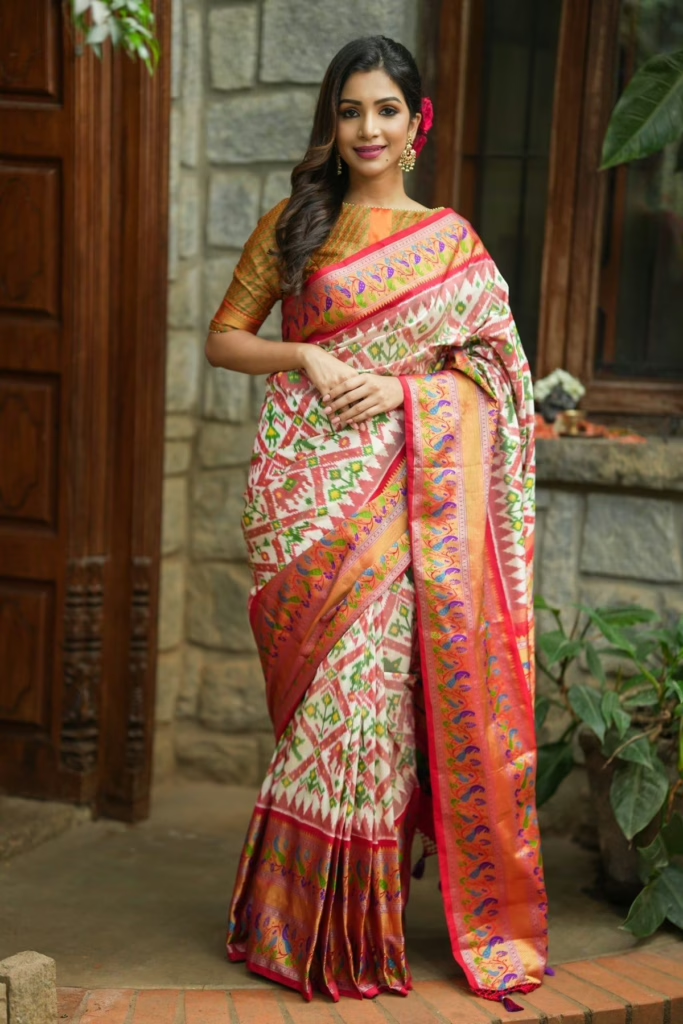
Photo Credits: Pinterest
Your hands are excellent judges of authenticity. Hold the saree and feel its weight, texture, and movement. Authentic Ikkat—especially one made using handspun cotton or natural-dyed silk—has a rich, textured feel. You will sense the firmness of real handloom threads and the gentle inconsistencies of natural yarn.
Machine-made or printed imitations often feel too smooth or synthetic. They may drape well, but they lack the depth and character of slow-made textiles.
A real Ikkat saree feels alive. It has body, personality, and texture—qualities that only handloom craftsmanship can create.
4. Examine the Colour Variations and Natural Dye Movement
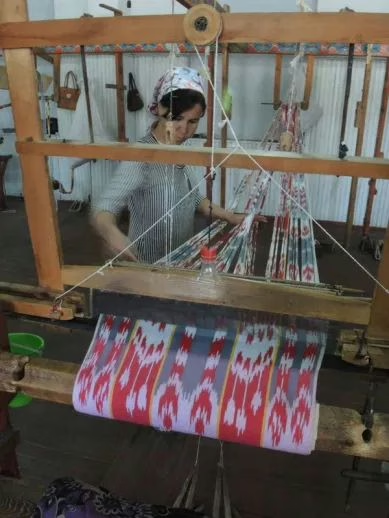
Photo Credits: Pinterest
Colour tells you more than a label ever will. Authentic Ikkat uses resist-dyeing, a technique that requires tying, dyeing, untying, and dyeing again. This process creates tiny tone changes and gentle overlaps in colour.
If you notice small variations, slight unevenness, or tiny shifts in shade, that’s a good thing. These are signs of genuine hand-dyed yarn work. Printed versions usually have flat, uniform colour with no depth.
When colours look layered, alive, and naturally blended, you’re likely holding a real traditional dye craft saree.
5. Appreciate the Little Imperfections of a Handloom Saree
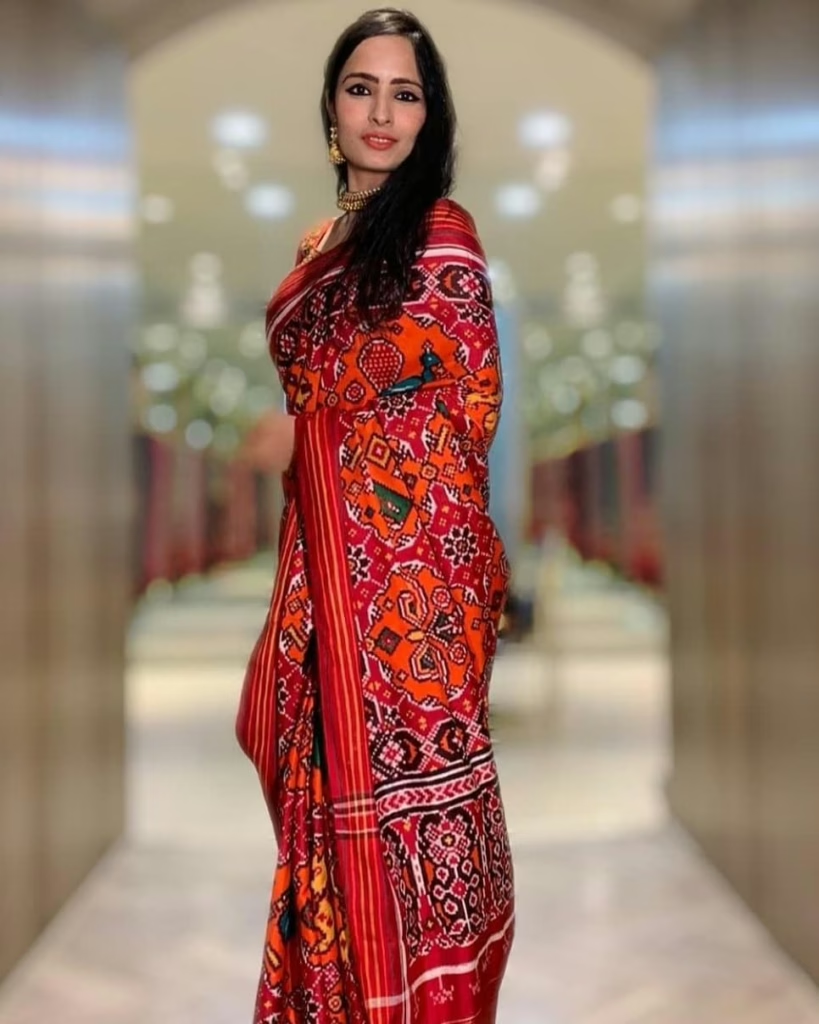
Photo Credits: Pinterest
A common misconception is that a saree must look “perfect” to be good. But real handloom sarees—including authentic Ikkat—carry small irregularities: a motif shifted slightly, a tiny variation in thread thickness, or minute pattern mismatches.
These are not flaws. These are fingerprints of the artisan who created your saree. These subtle differences prove that your saree wasn’t rushed on a machine but slowly crafted by skilled hands.
A saree that looks too perfect, too flat, or too “digital” rarely carries the soul of a one-of-a-kind artisan saree.
Choosing an Ikkat saree is not just about picking a beautiful piece of fabric—it’s about honouring a craft that has been passed down through generations. When you understand what authenticity looks and feels like, you not only shop smarter but also contribute to keeping these delicate traditions alive.
Liked our post? Do share and comment below. Ensure you always buy authentic pieces when it comes to sarees. Visit our post here to discover how to identify a fake dhakai from a real https://ethniclovers.com/real-vs-fake-identifying-a-genuine-dhakai-jamdani/one- stay informed and happy reading!