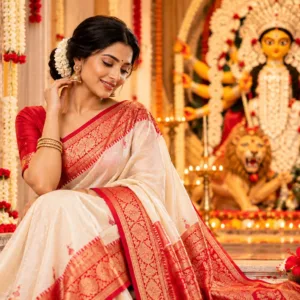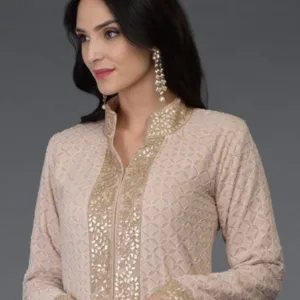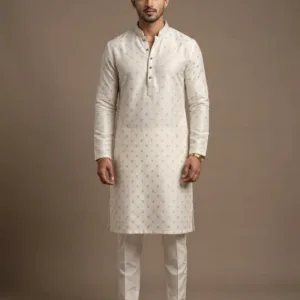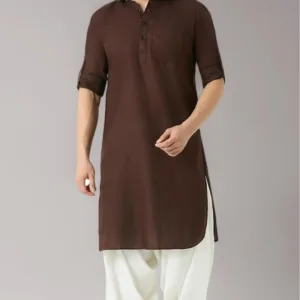
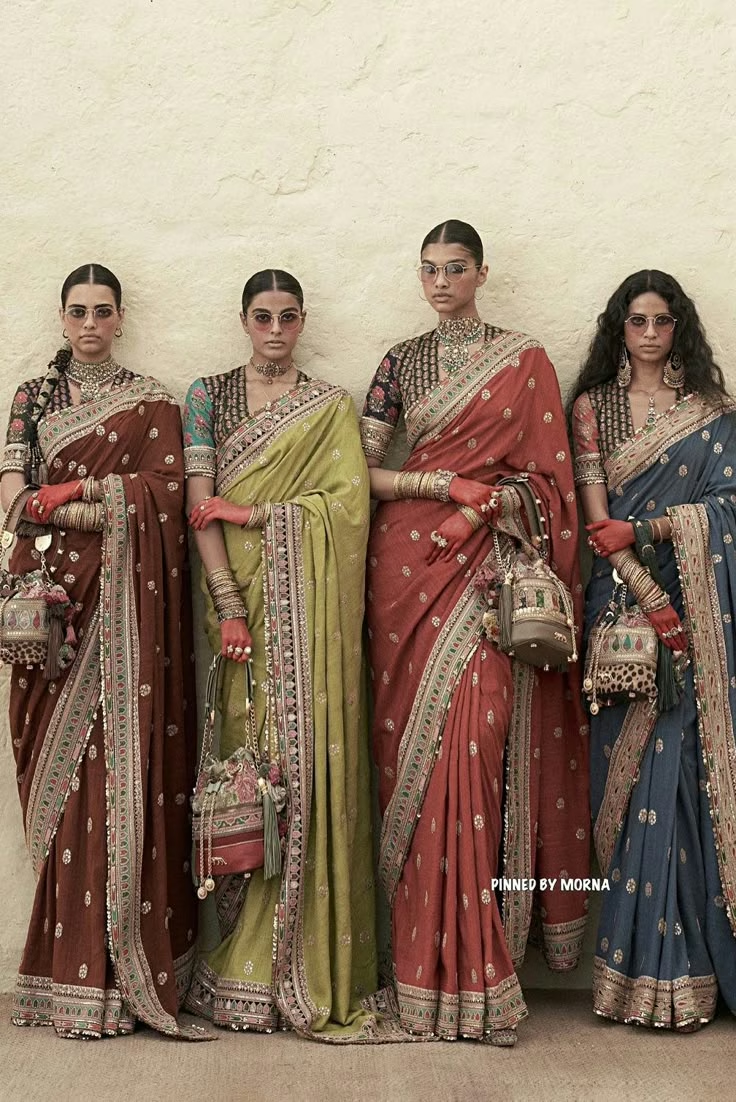
In the current fast-fashion industry, it is encouraging to see that many young Indians are embracing handloom primarily because of style and fashion trends. From these the “New Heritage” fashion concept arises.
Let us share something with you. Once upon a time, before the advent of fast fashion, handloom clothes were woven by hand. After the introduction of fast fashion, the aristocracy of the handloom clothes have developed
In this blog, we will explore why young Indians are reviving handloom textiles and how this fashion has gained recognition for its comfort and dominant role in the digital world. So let’s dive into the subject.
5 Reasons Why Young Indians are Opting For New Heritage Fashion Over Fast Fashion.
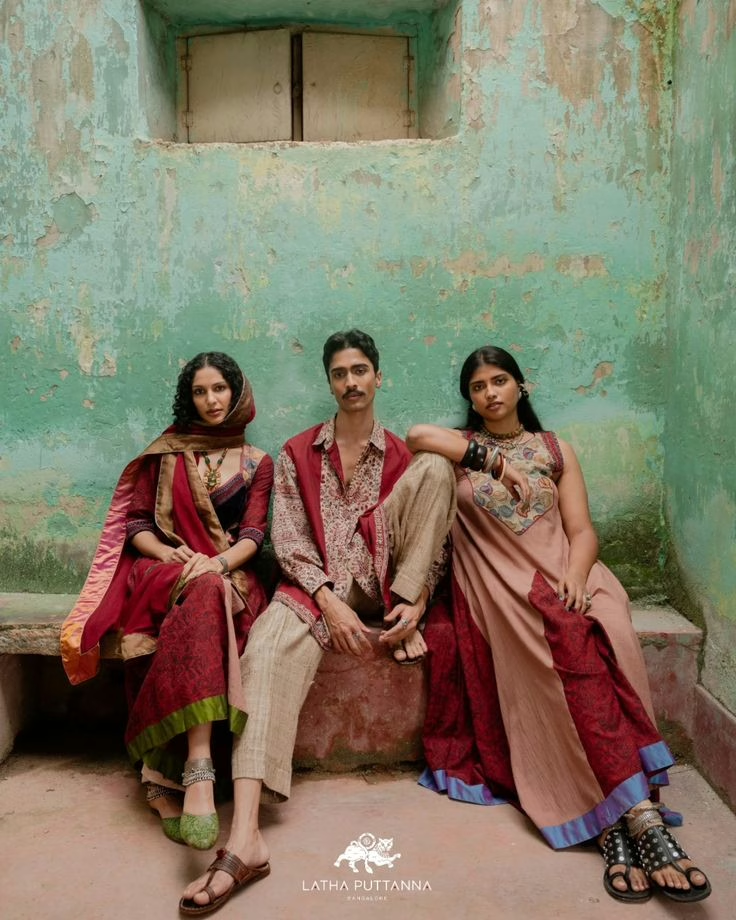
Photo credits : Pinterest
Before we discuss the reasons, we must understand the concepts of fast and slow fashion.
What is Fast Fashion?
Fast fashion is the rapid production of apparel through mechanization. This concept has gained widespread recognition among customers by offering it at an affordable price.
What is Slow Fashion?
Slow fashion is a mode of fashion that primarily focuses on manufacturing clothes using traditional handloom weaving. This fashion trend aims to ensure long-term durability.
Top 5 Reasons As To Why Slow Fashion Is Becoming Popular Among Young Indians
1. Sustainability
In the modern-day fashion world, we have generally noticed that the concept of new heritage fashion has played a dominant role in raising consumer awareness of comfort and style.
When we discuss comfort, we mean that consumers mainly prefer comfortable, breathable clothes.
This reason is mainly applicable during Indian summers, as it is prepared using eco-friendly techniques like hand weaving, and the materials used to make these clothes are biodegradable fabrics such as cotton and linen.
2. Durability
Durability is the most important part in the era of new heritage fashion. The handwoven clothes are crafted with attention to detail; the weave is so tight that they can be worn for a longer time.
The durability of fast fashion is much lower than that of slow fashion. The reason is that the fibers used are very cheap, and a huge amount of chemicals are used, which weakens the fibers.
3. Comfortability
When we discuss comfort in the new heritage fashion world, handloom fabrics are breathable, which is preferable for people to bear the hot Indian summers. Apart from breathability, the handloom fabric is soft, lightweight, and durable. It can be worn daily.
4. Cultural Pride
In the past, we believed that some traditional apparel, such as sarees, dhoti, and kurta, was meant only for traditional occasions like weddings and grand celebrations. Now, in this present scenario, numerous fashion designers are mainly focusing on creating a fusion like a dhoti converted into a dhoti pant.
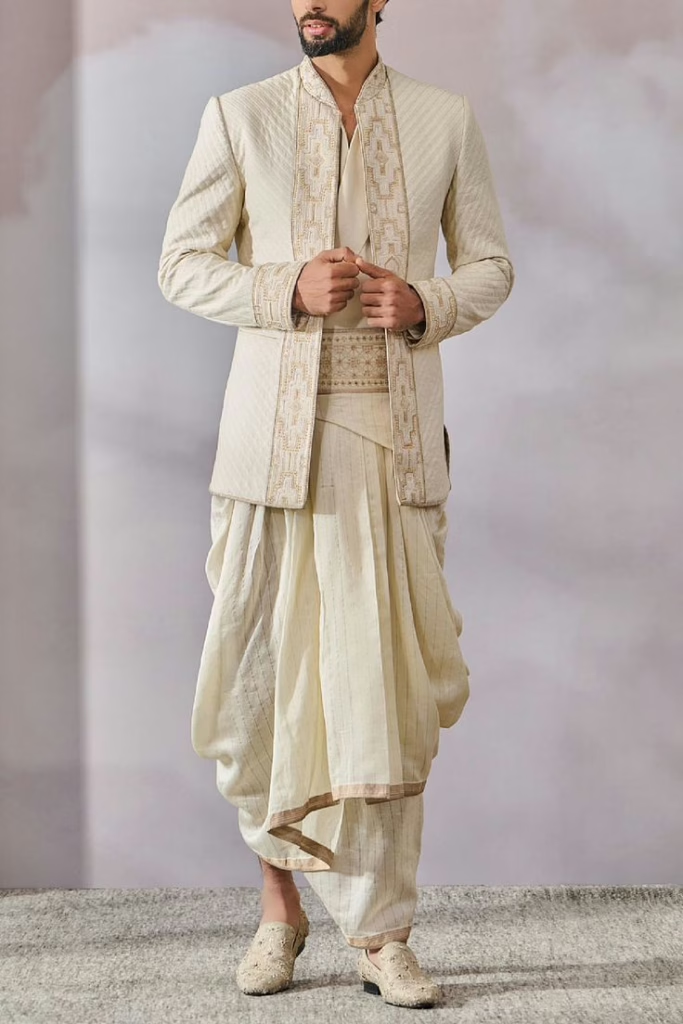
Photo credits: Pinterest
5. Easy Accessible
Nowadays, handloom apparel is meant to be modern rather than traditional. This fact is absolutely true.
We have noticed that numerous people are following the trend of wearing a kurta with jeans instead of pajamas, and women are wearing minimal jewelry along with a handloom silk saree.
The main reason for the above are the changing trends. If the whole world is focusing on changing trends, then why not the fashion world?
Secondly, the new heritage fashion concept is also applicable to office wear. Nowadays, people, especially women, tend not to wear highly fashionable apparel; they prefer minimalist dresses for comfort.
Role of Digital Technology in Popularizing New Heritage Fashion Among Young Indians
Before getting deeper into this above, let us compare the past and present scenario. In the past, people couldn’t get the latest updates; rather, it was very difficult for people to communicate frequently with each other.
Now, communicating and broadcasting the latest updates has become easier, helping people to stay up to date. This is because of the concept of digital technology.
This concept has revived the use of new heritage fashion through social media, where influencers are sharing stories about traditional apparel from different places.
The second concept are blogs, where different bloggers present on different handloom fabrics using core digital marketing tools.
Apart from this, renowned fashion brands such as Fabindia and Sabyasachi have their own social media sites, where people can scroll through posts, buy items with a single click, and have them delivered to their doorstep.
This technology has continued to play an important role in promoting local artisans’ creativity globally. Secondly, young Indians are reviving the use of new heritage fashion with a fusion.
Conclusion
From the above points, it is evident that the implementation of a new heritage fashion concept has mainly shown that young Indians are playing a pivotal role in taking a strong stand to support local artisans and preserving the legacy with a mix of old to new.
So, are you going to take a stand for these young Indians? Let us know in the comments below.