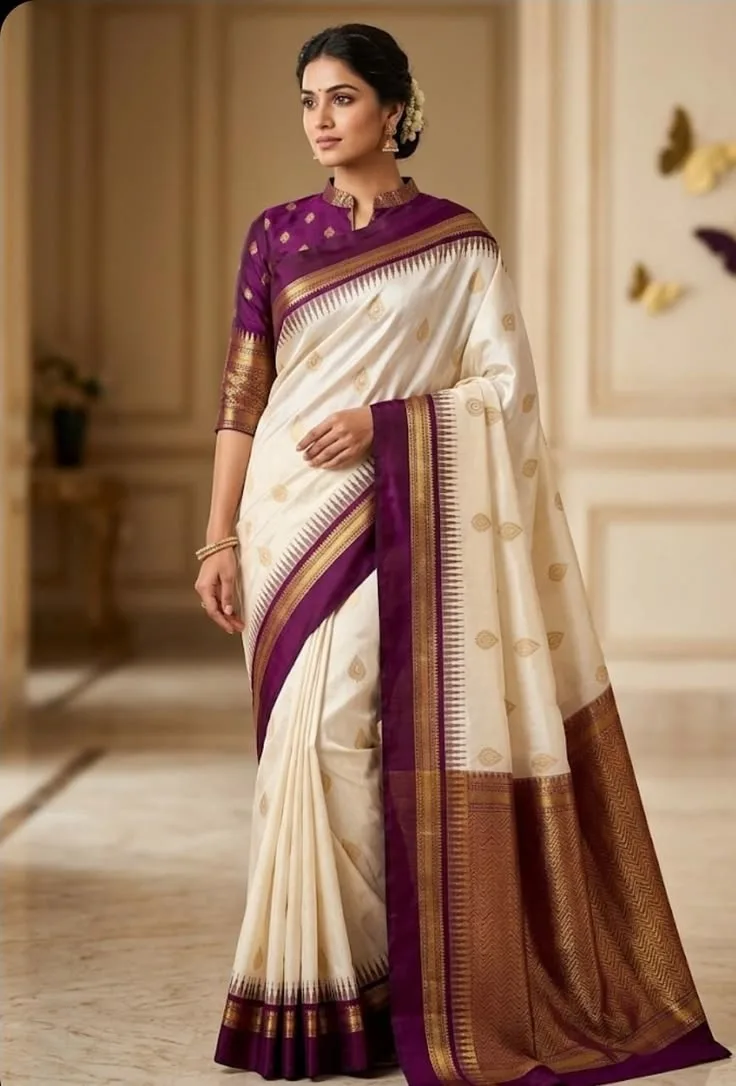
We are living in an era where numerous traditional Indian sarees are being modernized to preserve cultural identity. Among these fabrics is the Kanjeevaram silk saree. It is handwoven by the skilled artisans in Kanchipuram, Tamil Nadu. The fabric of this saree has gained huge popularity in festive and bridal wear for its durability and classic appearance.
In this blog, we are going to learn about Kanjeevaram silk saree, its history, steps to choose an authentic fabric, and steps to take care. So let’s dive into the matter.
What is Kanjeevaram Silk Saree?
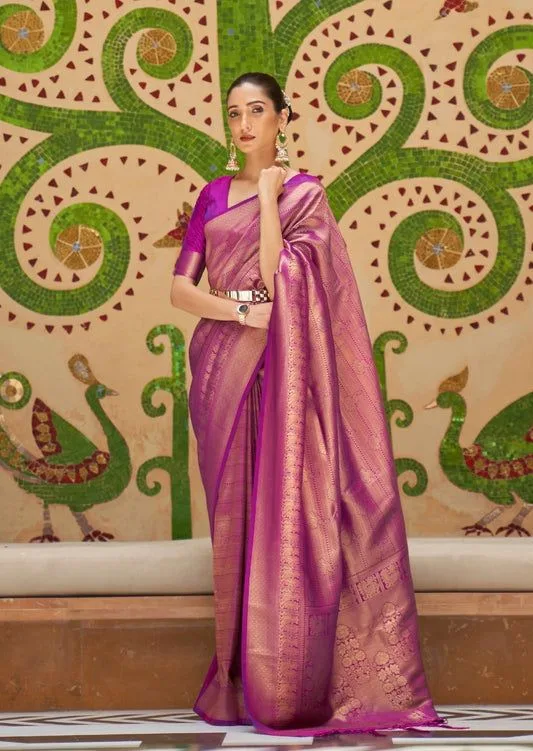
Photo Credit : Pinterest
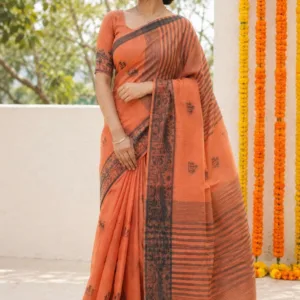
The Kanjeevaram silk saree is one of the most luxurious handwoven sarees, originating from Kanchipuram, Tamil Nadu. It is popularly known as the “Queen of Silk”. It is famous for its durability, vibrant colors, and heavy zari work. It is handwoven. The borders are worn separately and then interlocked. The interlocking technique makes the fabric strong
When we discuss the patterns, they are inspired by South Indian temple architecture, mythology, flora and fauna, and so on.
The most renowned garment made from this fabric is the Kanjeevaram Saree, a staple of traditional South Indian bridal attire.
History of Kanjeevaram Silk Saree
The history of Kanjeevaram silk saree dates back to the Pallava dynasty in the 7th century. It was renowned for its creative patronage, and the handloom technique originated primarily in Kanchipuram, Tamil Nadu, India.
During the Pallava and Chola dynasties, skilled artisans were encouraged to improve their weaving techniques and create luxurious textiles for royal and religious occasions.”
The weaving technique is very intricate and has been passed down from generation to generation. The silk which is used to weave the fabric is generally derived from Mulberry silk, which is found only in South India.
This fabric continues to preserve its 1500-year-old heritage by blending traditional craftsmanship with modern elements and entering the modern fashion world.
5 Steps to Choose an Authentic Kanjeevaram Silk Saree.
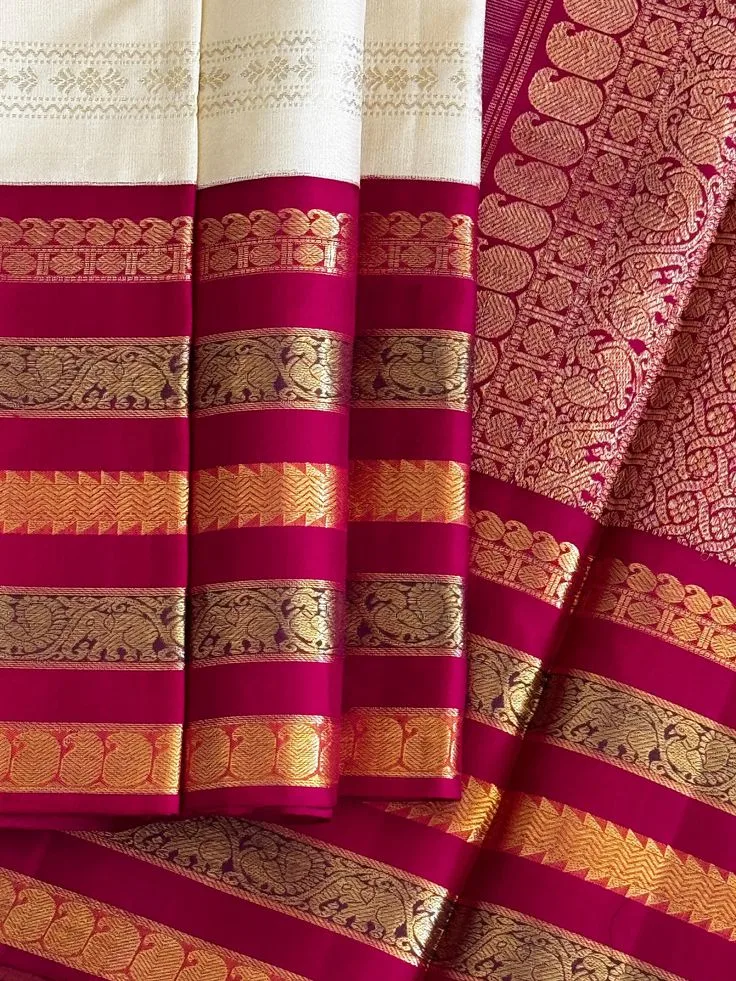
Photo credit: Pinterest
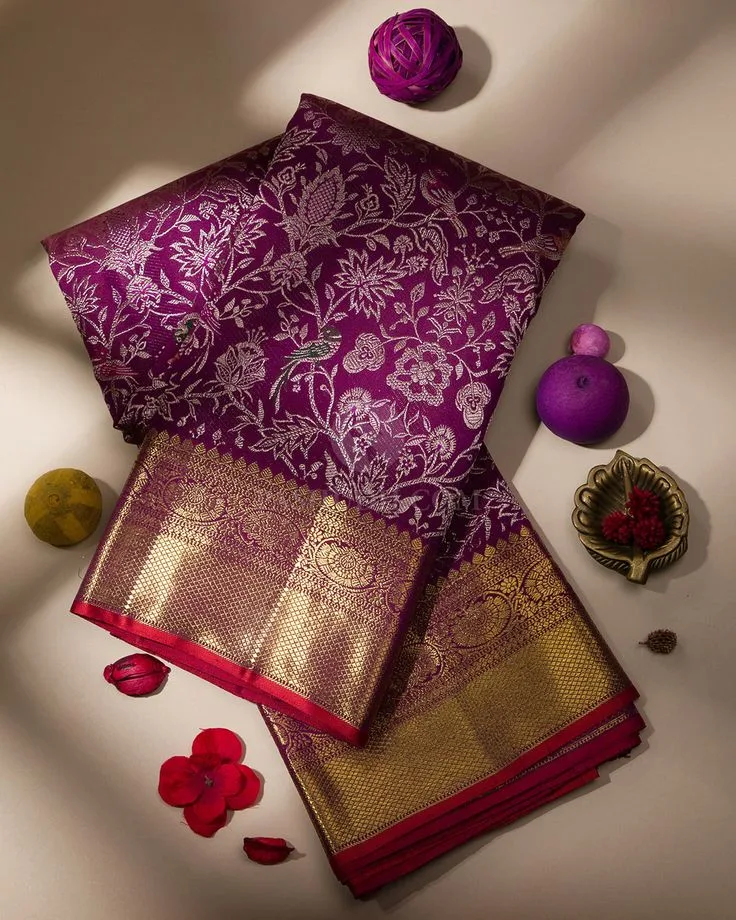
Photo Credit: Pinterest
Whenever you plan to buy authentic Kanjeevaram silk saree from the market, you have to remember the steps.
1. Silk Mark Certification
The Silk Mark Certification is a government certification run by Silk Mark organization of India that primarily focuses on the authenticity of silk fabric.
2. Examination of the Zari Work
The Zari work in the authentic Kanjeevaram silk saree is of high quality. Whenever you lightly scratch the fabric, you will notice that the silk core appears red. It means it is original.
3. Weight
Authentic Kanjeevaram silk saree is heavier than all other traditional fabrics. The reason is the quality of the silk and the detailed handloom work, both of which are considered authentic.
4. Detailed Inspection of the Fabric
It mainly uses the Korvai technique, in which the borders and fabric are gently interlocked to ensure durability and elegance. Make sure the fabric and embroidery are combined, not fastened with glue.
5. Price
The cost of real Kanjeevaram silk saree, along with Zari work, is very high. If you notice the cheaper rate, then you will understand that it is imitation work.
4 Steps to Care for Kanjeevaram Silk Saree.
The steps to take care of the Kanjeevaram silk saree are as follows
1. Washing
Never wash the Kanjeevaram silk with water. Even mild detergent use will weaken the fiber and damage the Zari work. If you want to clean it, you have to dry-clean it once a year after 3–4 wears, as it is festive wear.
2. Storage
Before storing in the almirah, always keep the Kanjeevaram silk saree open in the shade for 30 – 60 minutes after wearing it.
Store it on a wooden shelf, not on a metal one, as metal attracts moisture.
Don’t use plastic bags to cover the Kanjeevaram silk saree, as they trap moisture. The best option is to cover it with a soft muslin cloth.
3. Protect the Zari
Don’t spray perfume after wearing the saree, as the alcohol can spoil the Zari. Apply it before wearing it.
Don’t rub the Zari work with a cloth; just remove it gently with a soft brush.
4. Ironing
Whenever you iron, place a cotton cloth between the iron and the saree.
Don’t iron the Zari work border directly.
Set the iron to “silk” or low heat and iron on the reverse side, not on the direct woven surface.
Conclusion
Kanjeevaram silk saree is not only a luxurious saree but also a symbol of supreme craftsmanship in the fashion industry. Apart from this, it continues to appeal to modern generations for its durability, elegance, and cultural significance, as well as guidance on how to care for it.
If you really liked our blog on Kanjeevaram silk saree explore more stories like this on Ethnic Lovers, share it with fashion lovers, and leave a comment below.